
Developer Studio Hybrid • Publisher Akupara Games • Release November 13, 2025 • Platforms PS, Xbox, Switch, PC
I’m obsessed with the concept of Zelda-likes—games that blend heroic action and puzzle-solving in a way that feels like a genuine hero’s tale. When it’s done right, the experience sticks with you as an adventure you won’t soon forget. As soon as I discovered Gigasword, I felt it had the potential to be my next big journey. It’s a game that goes to great lengths to present a world worth investing in, puzzles to unravel, and a grave challenge to overcome. But do all those ingredients come together to make a worthwhile meal? From my initial hours with the game, the signals are mixed.

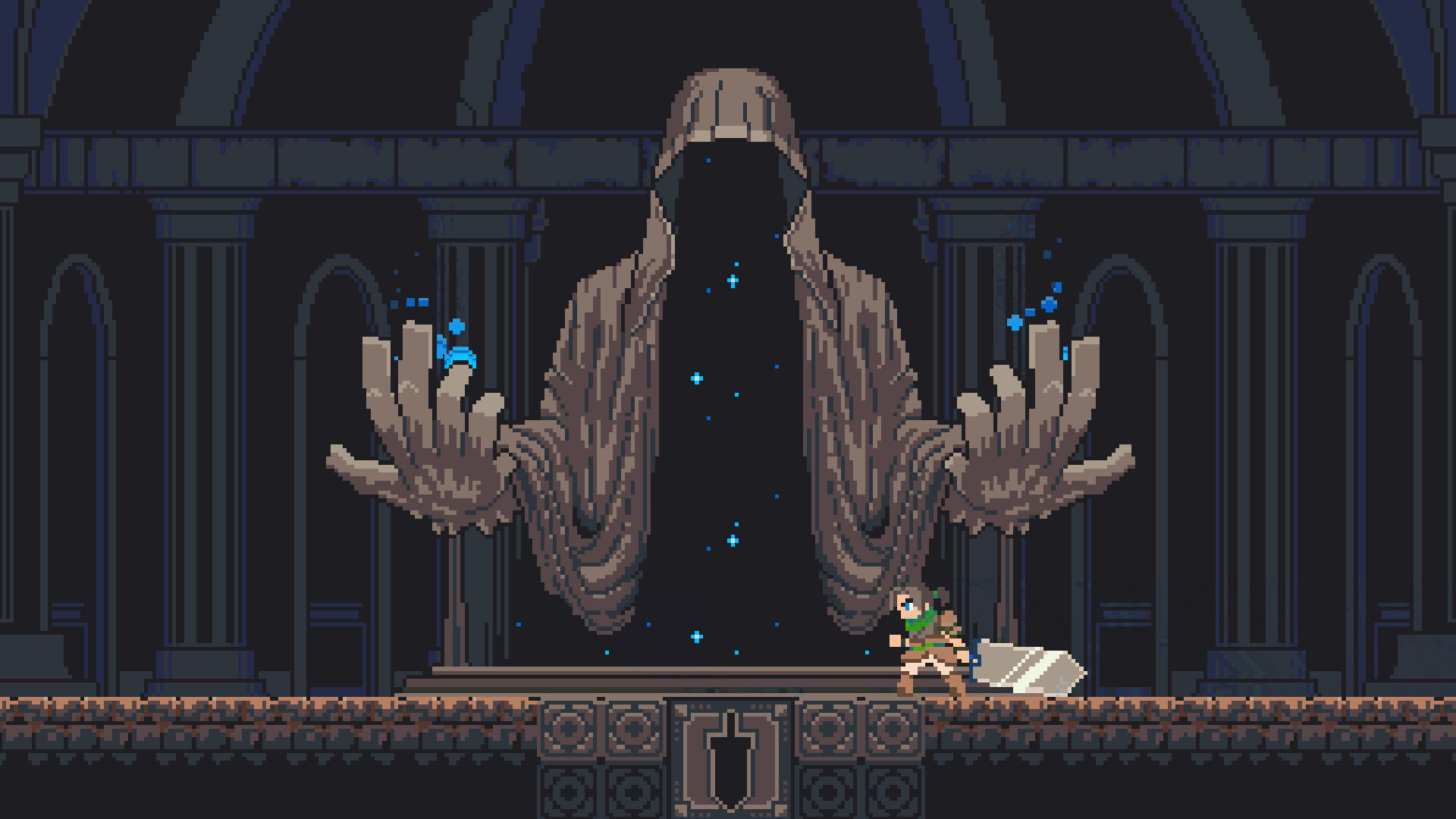
Gigasword opens with a simple question: What if a hero were literally hindered by their own weapon? It’s an idea we’ve seen explored in RPGs, hero shooters, and countless other genres, but rarely in a context quite like this. Right away, the game sets the tone. Our protagonist, Ezra, isn’t a trained super-soldier—he’s a victim of circumstance who has to muster every ounce of physical and mental strength to drag this colossal weapon around and strategically take down enemies.
Much of the gameplay revolves around using your enormous blade as a puzzle-solving tool rather than a combat instrument. You’ll often use it to move blocks, shift platforms, or act as a counterweight. Other times, the puzzles rely on the mobility you gain when you don’t have the sword, opening up paths for platforming that are normally inaccessible. That being said, I haven’t seen anything truly revolutionary in terms of puzzle design. So far, many of the rooms feel more like speed challenges rather than genuine brain teasers. After solving any new puzzle for the first time, I often found myself rarely needing to pause on the future iterations using the same mechanics. This ends up being a double-edged sword: making for great pacing as you work to gain context of the world in the opening hours of the game, while also running the risk of becoming repetitive depending on how the late-game puzzles evolve.

In a game titled Gigasword, I would hope there would be emphasis on the…well, gigantic sword. In combat, it should feel heavy and destructive. There should be a visual signal that the tradeoffs in movement are well worth the benefits gained in battle, and sadly, I just didn’t get any of that. The combat moments are entirely serviceable, but I can’t help but feel that there was a missed opportunity to have some fun and really exaggerate the two different sides of gameplay. Many of the standard enemies I faced off against were either slow, predictable, or both. Ideally, this would open the opportunity for more of a power-fantasy style approach to the fighting, but I found that Ezra’s animations and sounds lacked heft, leaving him feeling slow and inconsequential.
Things do get a bit more interesting as you unlock new skills and abilities, like the upgrade that allows you to send an aftershock through the ground so long as you have full health. Although they may not affect the gameplay in a meaningful way, the unlockable perks help break up the monotony of the more frequent encounters. Ultimately, the most dynamic encounters are the boss fights, which boast some of the game’s most impressive visual designs, such as an executioner encased in flesh or a giant skeletal bird-like creature.

The glue of any good Zelda-like (or any game, really) is a compelling story, and Gigasword comes out swinging. The intro is lengthy, but for good reason. We’re dropped into a fantastical world where tensions between humans and owl-people are boiling over—and it’s surprisingly easy to buy into. We quickly learn why both sides behave the way they do, get an early reveal of the world-ending threat, and watch the heroic baton passed to our protagonist. The foundation of the story is extremely solid, but like the combat and puzzles, I’m hoping the narrative can hold momentum. There are a handful of mysteries with the potential to build toward some great payoffs, but I worry there may not be enough NPCs or lore drops to give us the steady crescendo needed for appropriate and continued emotional investment.

Keen-eyed readers will have noticed a pattern in my impressions thus far. The game starts strong and signals that it could be a worthy addition to the Zelda-like genre. The issue is that it doesn’t shake up or modernize the formula enough to prove it won’t grow stale down the stretch. It really depends on what you are looking for. Do you want something classic or something revolutionary? Gigasword has plenty of potential to satisfy longtime fans of old-school Zelda-like puzzle platformers, while players craving a fresh, modern twist on the genre may walk away wanting more.

Leave a Reply