
Developer Giant Squid • Publisher Giant Squid • Release August 19 • Reviewed On PC
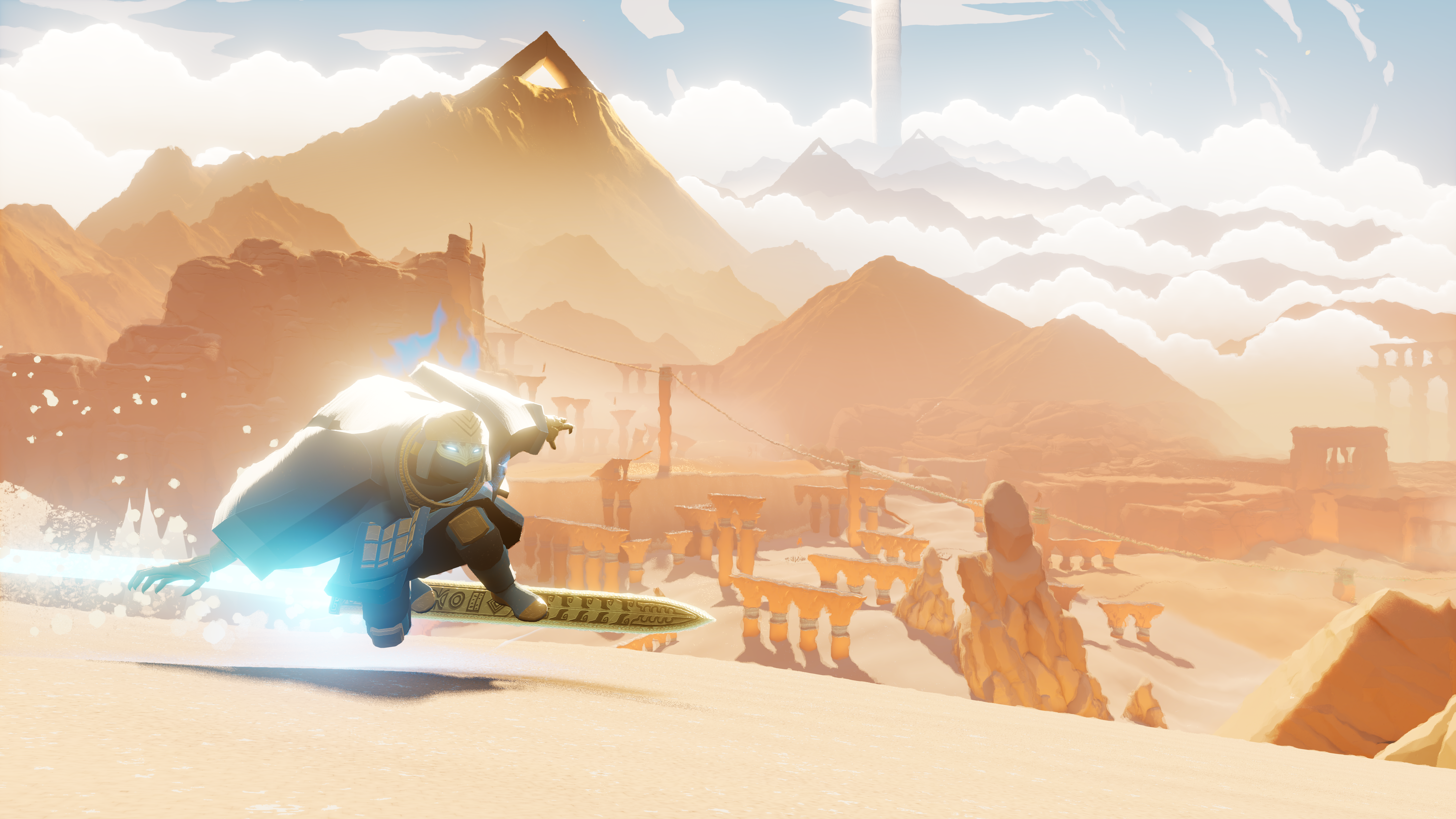
Giant Squid has long experimented with blending shimmering aesthetics, philosophical storytelling, and fluid traversal. Sword of the Sea is a triumph, balancing each element exquisitely. Dashing out from a shadowed canyon to discover a glittering vista — immeasurably amplified by the rapturous score — I can feel the rush of beauty expand my mind and heart. Rare is the game capable of affecting both on this scale. And without any dialogue to connect directly with the player, the developer’s accomplishment is all the more impressive. This is one of the year’s best games.

In darkness, my journey begins. Light, water, and the symbols of life drip slowly onto my lifeless body. I don’t need words to feel the weight of the moment. Then I jump onto my glorious sword, and the weight lifts as I glide with satisfying grace into the world. Giant Squid’s skill at weaving a believable, intense mythos in the first seconds of the game is undeniable. I’m in. Whatever comes next, I’m ready to face it.
I can’t wait for others to experience that captivating moment of looking out onto the landscape for the first time. The sands blanketing the earth undulate, swelling and sinking like the world beneath me is breathing. Pairing this with my mystical conveyance, exploring the land around me is a complete joy. I cut through sand drifts, rocket over dune peaks, and launch into the air with reckless abandon. I’m not weightless, gravity maintains its hold over me, but the feeling of freedom is heart-lightening.

With that freedom, I couldn’t resist the urge to seek out the points of interest dotting the landscape. I was not disappointed. My first stop turned out to hold a secret which only my floating sword could unlock. Almost without my knowledge, my sword lunged into action when faced with a particular artifact and unlocked a magical geyser, flooding the parched land with a sudden abundance of water and sea life. I could only look on and laugh with joy.
This wouldn’t be the last time a sudden reaction slipped from me while playing. Much later, after honing my sand-surfing skills, liquifying whole regions of the desert, and uncovering implicating tales carved in stone, I experienced a kind of transformation. When I realized what was happening, I shouted, “I’m magnificent AF!” This seemingly unprompted exclamation nearly choked my partner, who had begun eating right at that moment.

The emotional highs had their poignant, well-crafted lows. War, suffering, and loss are written throughout the ruined landscape. Every so often, I uncover a stone tablet or carved mural tucked away in sifting sands, drifting snow, hardened ice, and even glowing lava. They communicate the depths of the past. One of my most heartbreaking moments was studying a grandiose image of war and realizing my character’s outfit bore uncomfortable similarities to the aggressors, not the heroes. I carried that with me through the rest of the game, and it changed the tone of my perceptions. Again, to accomplish that without words is stunning.
For everything I adore about this game, it’s not without flaws. There’s a moment I might categorize as a boss fight that falls short in holding up the narrative weight of the moment with shallow action. Also, the ending, though intellectually notable, lacks the game’s otherwise bountiful magic.

Sword Of The Sea is a pleasure to play. Its traversal system allowed me to soar irreverently through monumental graveyards. Its narrative saw me flooding death with life and new hope. Its beauty boyoyed my spirit. Even with a few rough moments at the end, I still want nothing more than to fly back into its world.
I recommend this game to:
- Fans of fluid locomotion
- Anyone with three hours to spare
- Players interested in unearthing secrets
- Skating/surfing enthusiasts
- Those who delight in dazzling landscapes
- Anyone ready to fill themselves with wonder

Leave a Reply