
Developer Vermila Studios • Publisher Blumhouse Games • Release TBA • Platforms PS, Xbox, PC
There’s something I really admire about how weird Crisol: Theater of Idols is. It’s a bizarre first-person horror game that’s all about blood and dolls and old gods. The pitch is quite simple: what if every time you had to reload your gun, it cost you a non-insignificant chunk of your health? It’s a problem that creates real stakes for engaging with Crisol’s combat and makes every missed shot feel like a potentially devastating error.

The Blumhouse model is fascinating. The production company funds several small-budget horror films – and now games – per year in hopes that at least one makes it big to recoup the costs of the rest and then some. This has given life to classic horror films like Get Out, The Purge, and seven different Paranormal Activity movies. What I admire most about Blumhouse, however, isn’t the massive hits it produces, but the weirder ideas that skirt mainstream appeal: the productions that would never get funding from anyone else but still get to be made thanks to the company’s business model.
Crisol: Theater of Idols falls firmly into that second camp of weirder experiences that I’m glad gets to share the Summer Game Fest spotlight with larger horror titles with more mainstream appeal like Resident Evil Requiem and Silent Hill F.
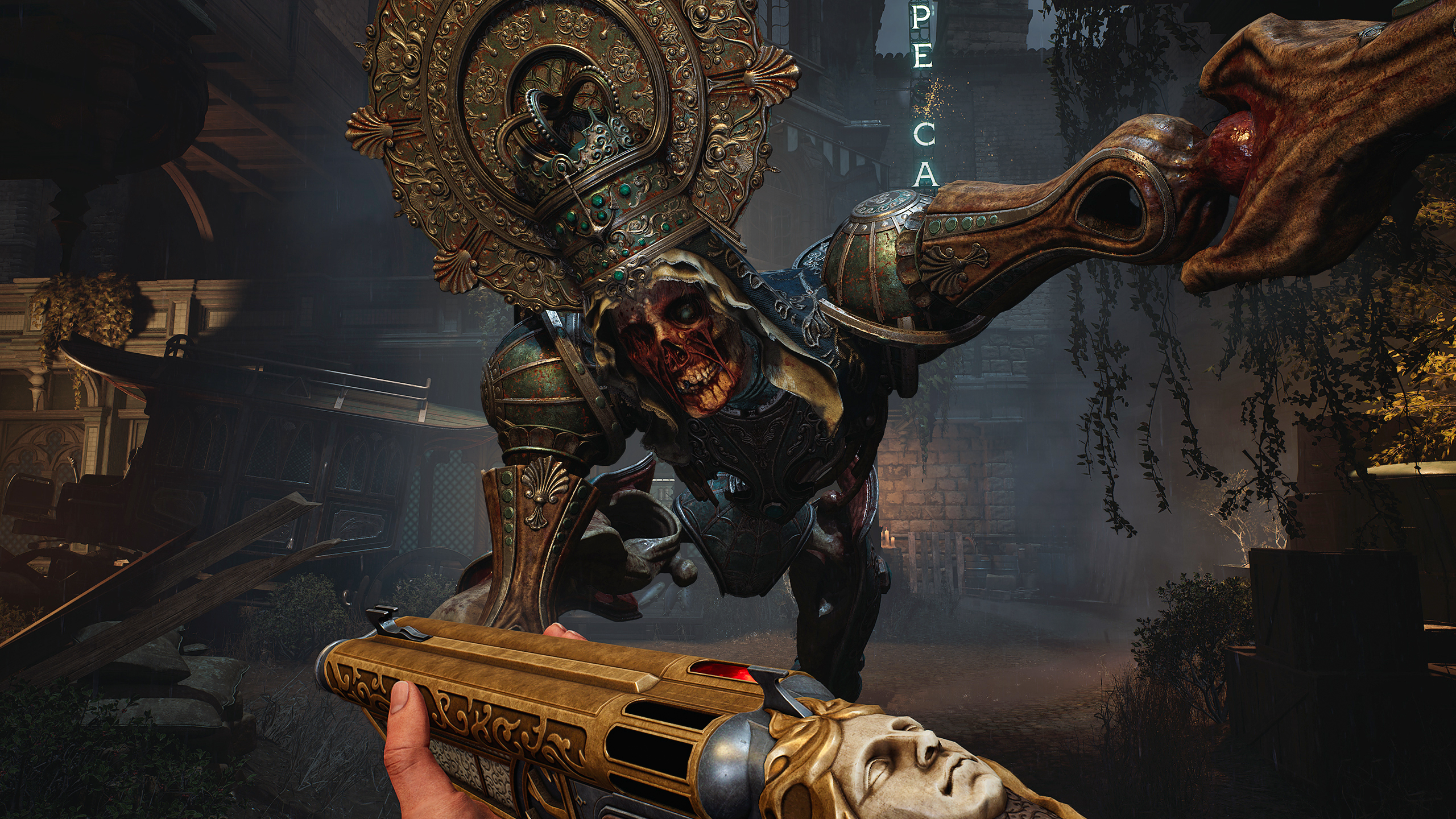
The 30-minute preview I got to play at Summer Game Fest dropped me in a dingy Spanish alley full of life-sized killer dolls, while armed with nothing more than a magical handgun powered by the protagonist’s blood. I had to shoot my way through the alley, ducking into corner stores in search of healing items and money before eventually playing cat and mouse with a giant, unkillable animatronic.

Crisol has an interesting relationship with its healing currency. Healing syringes can be used at any time to top up your health bar, but because your weapons don’t use traditional ammo and instead siphon your blood which drains your health, you shouldn’t be wasting a full syringe on a small wound since you need to carefully ration your health bar as it applies to dealing damage.
This is a kind of friction that gives Crisol its intensity. By applying a give-and-take to the idea of dishing out damage, players need to carefully consider their actions because it has a real cost. I ended up feeling an increased pressure to make all of my shots count. When I encountered enemies that shamble around swinging their bodies erratically, making them much harder to hit, the tension builds. That ensures each combat encounter is stressful.
In theory, Crisol gets around the predicament many survival horror games encounter: that combat becomes far less scary as the player earns more combat options. Other horror games like Resident Evil build tension with scarcity of resources spread out across a handful of different weapons, while Crisol keeps the ammo and healing resources the same, no matter what.
That all said, the preview build I played was a little too generous with healing items. While I can understand the tension I was meant to be feeling in combat, I was never too worried about having to make a tough choice between health and ammo. As this was a preview, I can’t say for certain how that system will feel in the finalized game – it’s possible health pick-ups were increased for the demo so that anyone checking out the game wouldn’t run into too much trouble. I hope the final version can explore the concept further to push players out of their comfort zone and into a place that’s a little more terrifying.

Additionally, the giant mechanical pursuer enemy that chased me for a portion of the demo was a bit of a dud. Pursuer enemies are often hit or miss and tend to live or die based on how smart their AI is. I usually like unkillable enemies who stop at nothing to find and demolish you, a la Mr. X in Resident Evil 2 or the Xenomorph in Alien: Isolation, since they push players to make more frantic decisions in the heat of the chase.
Crisol’s pursuer isn’t quite there yet. There was a lot of waiting around under a desk for the pursuer to slowly leave the area so that I could advance, which really deflated the panic of being chased. The pursuer felt underbaked, but if Vermila Studios can clean those sections up as development continues, Crisol could be able to fully realize its premise as a frantic horror game that pushes players from horrifying encounter to horrifying encounter.
Despite the rougher edges on some of its mechanics, I’m still really interested in Crisol: Theater of Idols’ final release. The enemy design is absolutely ghoulish, and it’s always shocking to shoot the head off a kill-hungry giant doll only for it to be completely unfazed and continue lurching forward. The design of the cobblestone Spanish city streets is unique and gave the demo a cultural twist that I haven’t seen in many other horror games. The idea that the guns you carry have spikes all over them — not to be used as weapons against your enemies, but to dig into the protagonist’s hands to extract ammo — is delightfully awful.
So far, Crisol: Theater of Idols is a bit more style over substance. I hope that the substance comes as development continues. Even if it doesn’t, the game tries out enough new concepts that I’m willing to give it a fair shot anyway. It’s the type of bizarre horror experience that you only ever find in the indie space, and I’m glad Blumhouse Games is giving it a chance.

Leave a Reply